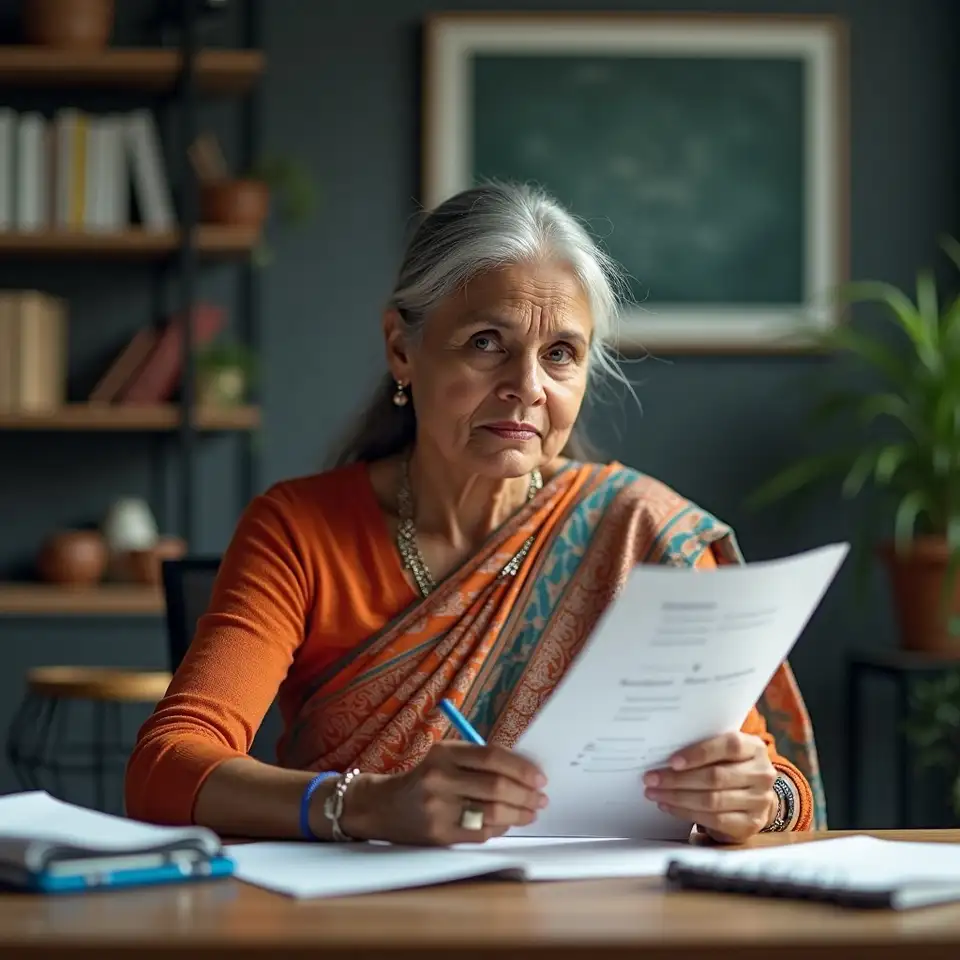
Once, a verbal assurance and a handshake could be enough to access aid. Now, thorough
documentation is the backbone of every successful pension application in India. We find
that the government’s checklist is strict, but clear. Let’s start with the conclusion:
seniors who prepare a full set of documents face fewer delays and enjoy a smoother
experience.
What do you need? Begin with a valid age proof—Aadhaar card,
voter ID, or birth certificate. Add an income certificate issued by the local authority,
and proof of residence, such as a utility bill or ration card. A bank passbook, a
passport-sized photograph, and, if relevant, a death certificate for widow pensions
round out the essentials.
Organize your paperwork in a dedicated folder. We
recommend making two sets of photocopies, keeping originals safe but accessible. If
you’re unsure which documents are required for your specific scheme, consult your local
social welfare office or official online portals. Avoid unofficial agents who offer
shortcuts—compliance with official lists is key.
Thought experiment: Imagine
you submit your pension application, only to be told a certificate is missing. Now,
compare that with a scenario where every document is checked against the government list
before submission. The first results in back-and-forth visits; the second, a single
smooth appointment.
To protect your peace of mind, always check for the
latest document updates from state and central authorities. Some regions may request
extra papers, such as disability certificates or family details. When in doubt, ask for
a written list to avoid misunderstandings.
Contrast the informal past with today’s systematic process. The digital age allows us to
access many required documents online, but this convenience comes with its own learning
curve. Seniors may need help navigating websites to download income certificates or
Aadhaar updates. Family members or community centers can be valuable allies.
Most
pension and aid programs accept applications both in-person and online. For online
applications, scanned copies are required. Check file size and format guidelines, as
incorrect uploads can cause delays. In person, bring both originals and photocopies for
verification.
If you’ve recently moved or changed banks, update your address
and account details on all documents. Discrepancies between forms and records are a
common reason for delays. We suggest checking each document’s expiry date and ensuring
information matches exactly.
Thought experiment: What if your name is spelled
differently on two documents? This mismatch can halt your application. Cross-check all
papers and, if needed, request corrections before submitting your forms. Attention to
these details protects your application from unnecessary setbacks.
The sheer number of required documents can seem daunting, but a step-by-step approach
makes the process manageable. Begin by creating a checklist specific to your pension or
aid scheme. Gather age proof, income certificate, residence proof, bank details, and
photos. For widows or the disabled, add relevant certificates.
Organize your
folder by grouping originals and photocopies. Check that all names, dates, and addresses
match exactly. If you are unsure about a document, consult your local office or
helpline—official advice beats assumptions every time.
Many seniors benefit
from community-run camps that assist with paperwork. These sessions are useful for
clarifying doubts and completing forms on the spot. If you cannot attend, ask a family
member to help, or use a cyber café to access online portals.
In conclusion,
the more organized we are, the smoother the process. Anticipate changes—regulations and
required documents can shift with government updates. Stay alert, stay organized, and
support each other as we navigate the path to social aid.